KENYA: I Found My Place in the Digital World
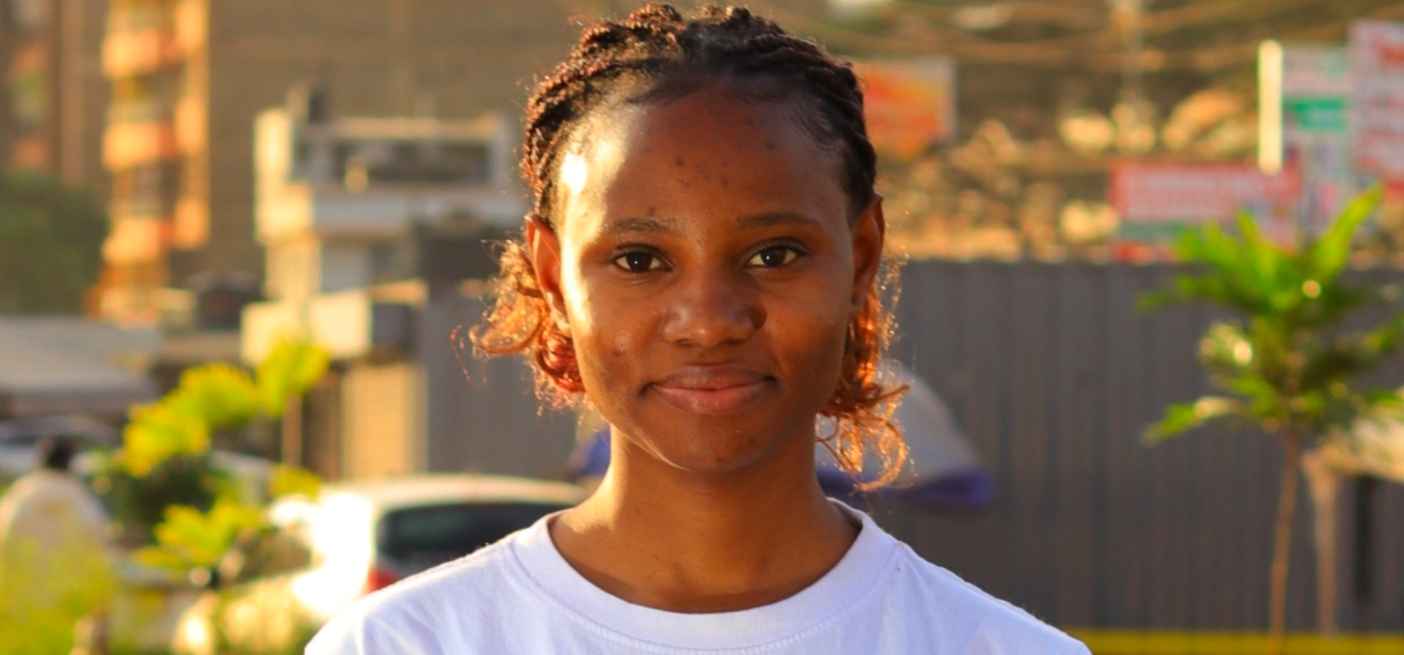
From watching others use a computer at a cyber café to earning enough online to buy her own laptop, Faith shares how digital learning expanded her opportunities and what still keeps young people in rural communities from getting started.
Digital access is no longer a luxury – it is economic survival, education, and creativity. It is voice and visibility.
I grew up on the wrong side of the digital divide. Our homestead is in the lower part of a village in rural Kitui County, Kenya. It’s near a river, where network connectivity can be unreliable. Homes on higher ground generally have better reception. Electricity access is also limited, and many households rely on solar power.
Computers were not part of my everyday life. I encountered them occasionally in cyber cafés, where someone else operated the computer for me.
Those visits were brief and purposeful, usually during school holidays when I needed to download and print revision materials. I would carefully explain what I needed, then wait, observing the screen from a distance until everything was done.
I never lingered long enough to imagine that entire worlds existed inside those machines. What I did not know then was that while I focused on passing exams, an entire economy, community, and future were quietly growing online without me.
The first time I heard people discussing artificial intelligence (AI) tools like ChatGPT, Midjourney, Google Bard, and GitHub Copilot, and digital opportunities, I felt as though I had walked into the middle of a conversation that had started years before I arrived.
Everyone seemed to understand the language except me.
I smiled, nodded, and listened, but inside I was trying to figure out what exactly they were talking about. What was ChatGPT? How could a machine answer questions? What did people mean when they spoke about online work and digital skills?
The more people spoke, the more I realized how little I knew.
My lack of knowledge was not due to a lack of ability or curiosity. But because I had never been given the same access.
While I was still learning how to confidently use a computer, the world was already discussing AI. While I was figuring out how to navigate online platforms, people elsewhere were building businesses, finding remote jobs, creating content, and connecting with opportunities through technology.
It felt as though the future had already arrived, and somehow I had missed the invitation.
Then one evening, while scrolling through content I barely understood, I came across a free AI and Career Essentials programme offered by ALX Africa. Something about it caught my attention. Maybe it was curiosity or the quiet fear of being left behind. Whatever it was, I signed up.
That small decision changed the direction of my life. Learning was exciting, but it was not easy.
I used my itel smartphone to watch tutorials, access learning materials, and complete the programme’s activities. I spent days carefully managing my data bundles because every megabyte mattered, and evenings downloading learning materials before campus Wi-Fi became unreliable. Sometimes I sat staring at unfamiliar concepts, wondering whether everyone else understood them more easily than I did.
Then one day, a hard truth hit me: no one was coming to save me. No one was going to hand me a perfect roadmap or the opportunities I dreamed about.
If I wanted a different future, I would have to build it myself. So I began putting more time into learning.
I followed tutorials, completed assignments, and asked fellow learners questions when I needed guidance. Through practice, I became more familiar with the tools and how to use them in real life.
I learned how to build a website with AI, analyse information, and use digital tools to improve my curriculum vitae and professional profile. Building a website with AI stood out to me because it showed me how I could turn an idea into something practical.
What surprised me most was how quickly everything changed. Just when I thought I was beginning to understand one AI tool, another would emerge. Before I could fully explore a platform, a newer version was already being discussed. It often felt like I was running toward a moving finish line.
I wondered if I would ever catch up. The world of AI seemed to reinvent itself overnight. Every day brought new software, new possibilities, and new conversations. But over time, I realized I could keep learning without mastering everything at once.
Then I discovered that people were earning money online using skills they had acquired. At first, I could hardly believe it. For years, I had viewed the internet mostly as a place to search for information. Now I was discovering that digital skills could become income.
I began exploring opportunities and applying what I was learning. My progress was gradual, but even the small victories mattered to me. I was beginning to participate in a world I had previously watched from a distance.
Eventually, I earned enough money to buy my first laptop. I had saved for approximately two semesters, almost a year, to afford a second-hand laptop.
I still remember that moment. I was incredibly excited. To an outsider, it would have looked like an ordinary purchase. To me, it felt like a milestone years in the making. I was not just buying a device. I was buying access.
One of the first things I did was write an opinion piece that was published by Daily Nation. As a Journalism and Mass Communication student, seeing my writing published in a national newspaper was unforgettable. Something I had worked towards was finally happening.
With my own laptop, I could continue learning and exploring opportunities that had once seemed impossibly far away.
When I visit my family in the village, I try to explain artificial intelligence and digital opportunities to my younger siblings. I tell them about the tools I have discovered, the skills people are learning online, and the opportunities that exist beyond our village. I want them to know that these tools are available to them, too, not just for people who grew up in big cities or surrounded by technology.
As I watch their faces, I recognize the confusion and curiosity I once had. I remember trying to understand unfamiliar words while everyone around me seemed to be speaking a language I had never learned. I remember wondering whether I was already too late.
Those conversations make me think about other young people whose opportunities remain limited by access. I know the world is not short of brilliant, curious, ambitious young people. They carry such huge potential if only technology were within reach. However, access remains uneven.
The harsh reality is that some doors open easily for some people, while for others, the same opportunities are invisible.
We often speak about artificial intelligence as the future. But before we talk about the future, we must talk about access.
Because digital access is no longer a luxury – it is economic survival, education, and creativity. It is voice and visibility.
Digital access is the difference between participating in the future and watching it happen from a distance.
I am still learning and trying to understand a rapidly changing world, but I have seen enough to know that talent exists everywhere. What is not equal is opportunity.
My experience has shown me what access can make possible. It has also made me more aware of the young people who are still waiting for that chance.
Let us invest in digital inclusion by making devices, internet access, and digital skills training more affordable and available, especially for young people in rural and underserved communities.
We all have a part to play. If you know of a free course in AI, coding, digital marketing, or other practical skills, share it with a young person who might never come across it on their own. Connect them with the resources they need. If you have the skills, offer to guide someone through their first steps.
The future is already being built online. The question isn't whether we are ready for it, but who gets to access it.
Young people in communities like mine deserve the opportunity to shape it.
STORY AWARDS
This story was published as part of World Pulse's Story Awards program. We believe every woman has a story to share, and that the world will be a better place when women are heard.